
safe, effective products that serve a variety of clinical needs.
Learn more about our full line of birth tissue technologies.
Abstract, Articles and Posters
-
Article
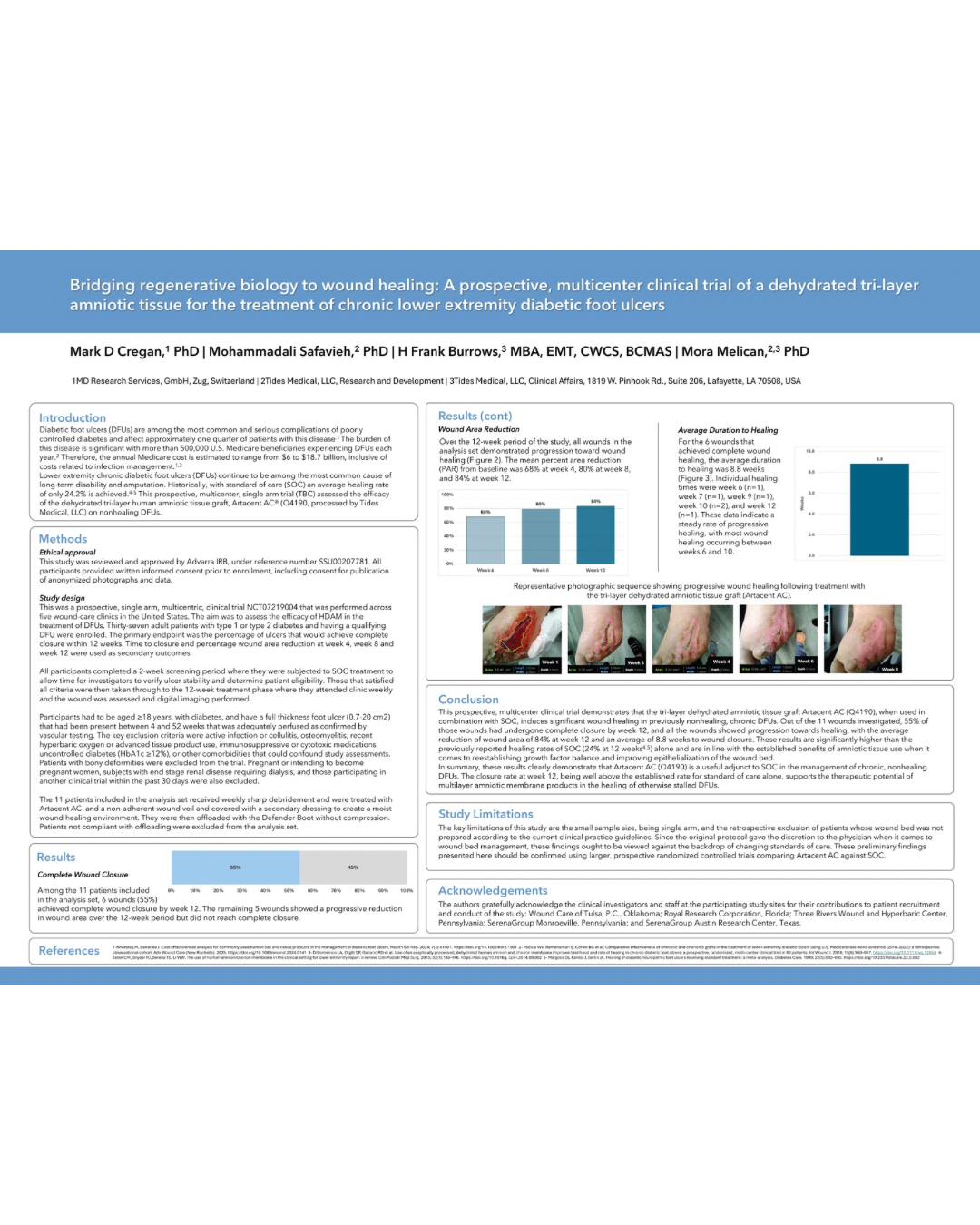
Diabetic foot ulcers (DFUs) are among the most common and serious complications of poorly controlled diabetes and affect approximately one quarter of patients with this disease.1
The burden of this disease is significant with more than 500,000 U.S. Medicare beneficiaries experiencing DFUs each year.2
Therefore, the annual Medicare cost is estimated to range from $6 to $18.7 billion, inclusive of costs related to infection management.1,3 The presence of a DFU alone increases the risk of serious complications (most notably, lower extremity amputation, and mortality).2
Using standard of care (SOC) treatment on chronic DFU wounds, comprising debridement, offloading, infection control, and moist wound bed maintenance, early wound closure is often not achieved, with healing rates of only 24.2% at 12 weeks.4,5 This failure is in part due to the pathologic microenvironment that is characteristic of chronic wounds: a lack of growth factors and an increase in the activity of destructive proteases.
-
Article
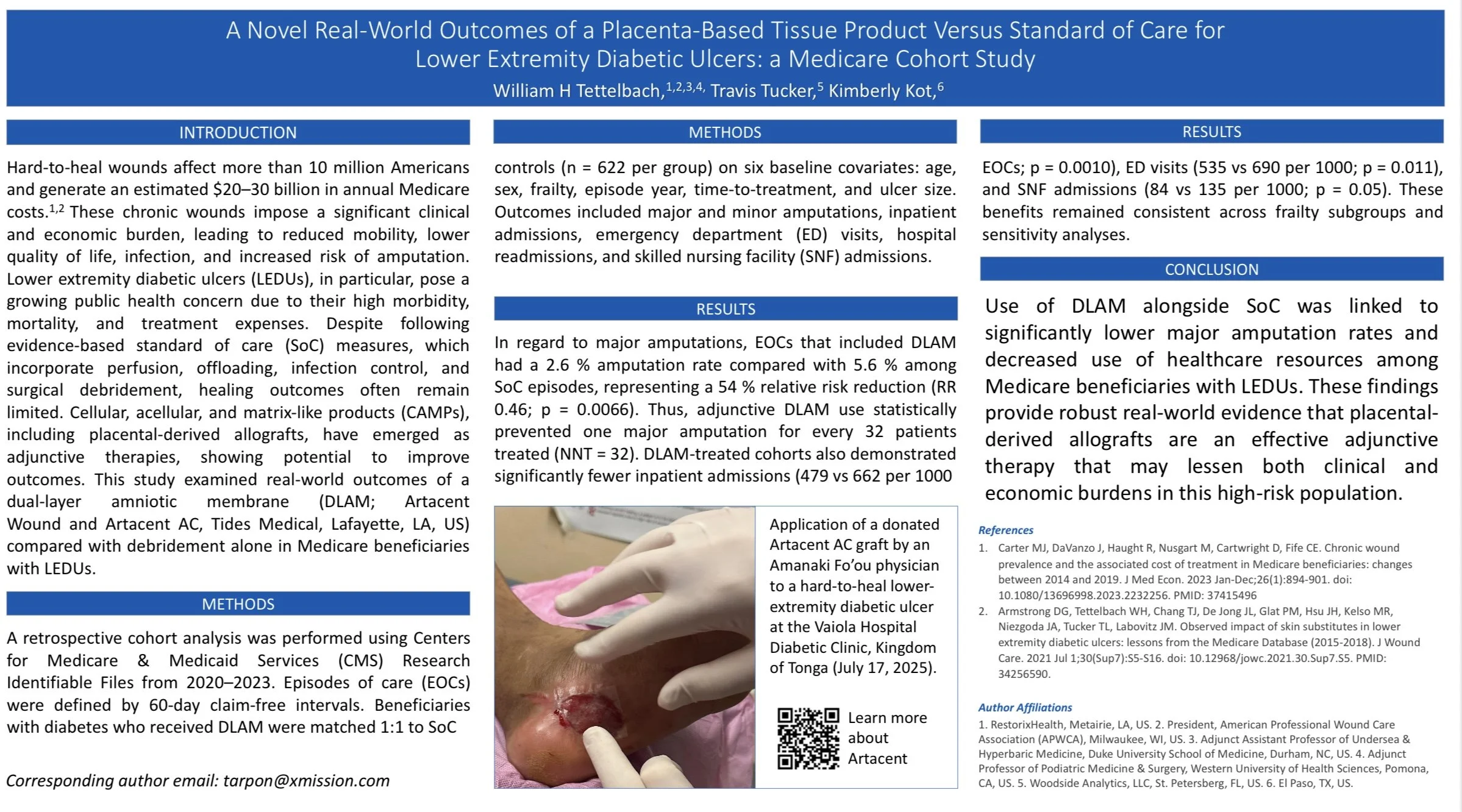
Objective: To compare clinical and economic outcomes of the Artacent placental allograft to 18 other covered cellular and matrix-based products (CAMPs) using data from a Medicare database.
Methods: We conducted a retrospective cohort study using data from the Centers for Medicare and Medicaid Services (CMS), employing a 1:1 matching procedure based on six pre-specified baseline covariates for Medicare patients who received Artacent or 18 other covered CAMPs for the treatment of lower extremity diabetic ulcer (LEDUs) between 2020 and 2023. LEDU episodes were constructed from claims data by linking sequential services until a 60-day clean period without LEDU related claims was observed, which signified the end of an episode. Outcomes assessed within each completed episode included major and minor amputations, as well as emergency department visits, hospital readmissions, or care transitions to other sites of service.
-
Abstract
Objective: To compare clinical and economic outcomes of the Artacent placental allograft to 18 other covered cellular and matrix-based products (CAMPs) using data from a Medicare database.Methods: We conducted a retrospective cohort study using data from the Centers for Medicare and Medicaid Services (CMS), employing a 1:1 matching procedure based on six pre-specified baseline covariates for Medicare patients who received Artacent or 18 other covered CAMPs for the treatment of lower extremity diabetic ulcer (LEDUs)between 2020 and 2023.
Podium Presenation